Table of Contents
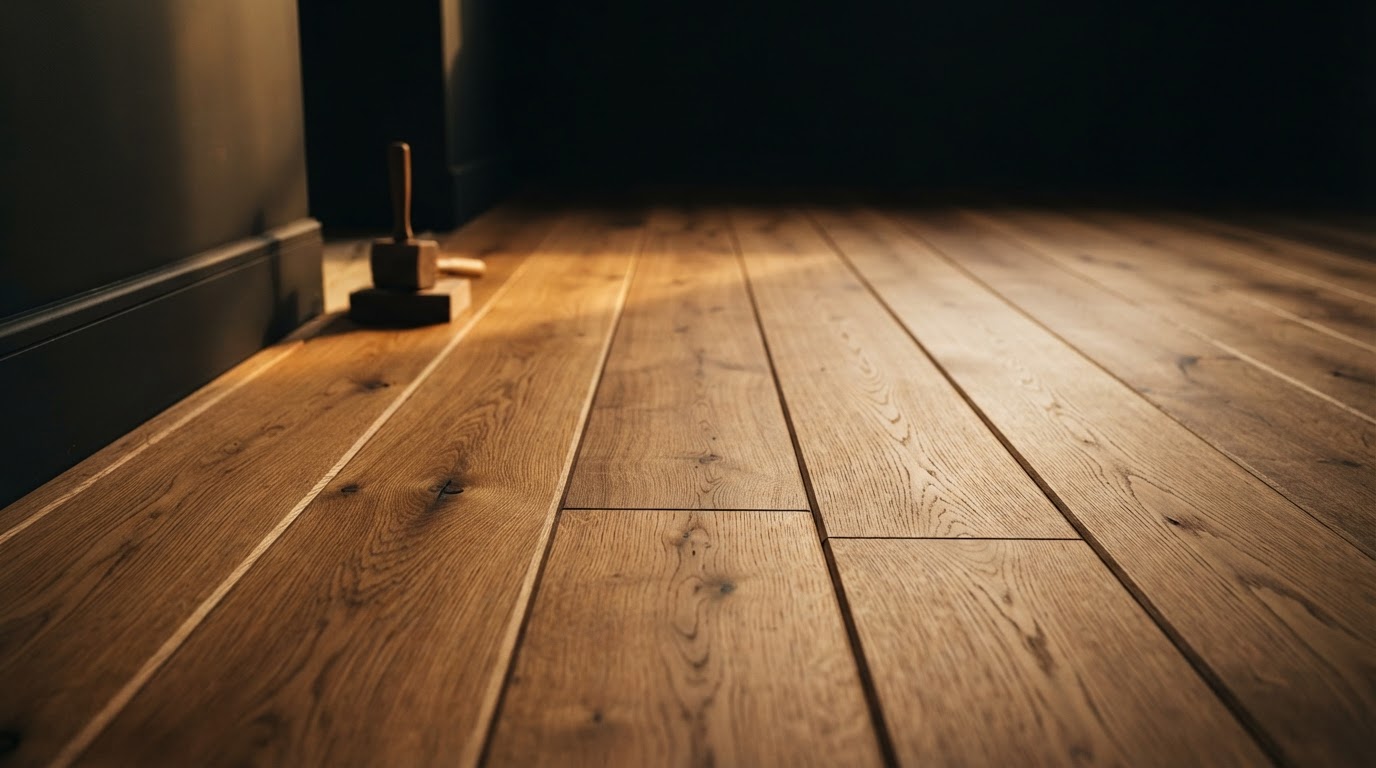
Solid hardwood is the only one of the three that can be sanded and refinished, which is why it lasts decades. A scratched or worn hardwood floor can be brought back to new. A scratched laminate or vinyl floor has to be replaced.
Hardwood lasts and refinishes
Solid hardwood is the only one of the three that can be sanded and refinished, which is why it lasts decades. A scratched or worn hardwood floor can be brought back to new. A scratched laminate or vinyl floor has to be replaced.
The trade-off is water tolerance. Hardwood is not water tolerant. A spill cleaned quickly is fine. Standing water, a leak, or a flood will swell, cup, and stain it. Hardwood belongs in living areas, not wet rooms.
Engineered hardwood splits the difference. It has a real wood wear layer that can be refinished, usually once or twice, over a stable core that resists the movement that troubles solid wood. It is a good choice where solid wood is risky, like over concrete or in a humid climate.
Laminate is a budget surface
Laminate is a fiberboard core with a printed image of wood under a wear layer. It is affordable, installs quickly, and resists scratches better than wood. The look is a photographic reproduction, so close inspection reveals it is not real wood.
Laminate does not handle water. The fiberboard core swells at the seams when wet, and a wet laminate floor is usually a replaced laminate floor. It is a fine choice for dry living areas on a budget, but it does not belong in wet rooms.
Laminate cannot be refinished. When the wear layer is scratched through, the floor is done. That makes it a shorter-term choice than hardwood, even though the upfront cost is lower.
Vinyl handles water
Vinyl plank and vinyl tile are water-resistant, and some are fully waterproof. That is their real advantage. A vinyl floor handles splashes, spills, and even standing water without swelling or staining. It belongs in kitchens, baths, mudrooms, and basements.
Vinyl is warmer and softer underfoot than tile, and quieter. It installs without grout, which is easier and cleaner. The higher-quality vinyls have a thick wear layer and a realistic printed image that holds up well.
Vinyl cannot be refinished, but individual planks can be replaced. A damaged plank is swapped without redoing the floor, which is a real advantage in a rental or a high-traffic home. The subfloor has to be smooth, because vinyl telegraphs every imperfection.
How they age
Hardwood ages the best because it can be refinished. A twenty-year-old hardwood floor can look new again. A twenty-year-old laminate or vinyl floor is at or past its life.
Laminate and vinyl age by replacement. When they wear out, they come out. That is fine for a budget floor in a room that is expected to be redone, but it is a different long-term cost than a floor that lasts.
The real comparison is lifetime cost, not install cost. Hardwood costs more up front and lasts longer. Laminate and vinyl cost less up front and need to be replaced. Which is cheaper depends on how long you keep the floor.
Which for which room
Living rooms, halls, and bedrooms: solid or engineered hardwood for the refinishability and the warmth. Kitchens: engineered hardwood if you love wood and are careful, or tile or vinyl for water safety. Baths and mudrooms: tile or vinyl.
Basements: vinyl or engineered hardwood rated for below grade. Solid hardwood is risky below grade because of the moisture. Laminate is risky in any room that might get wet.
We help you match the floor to the room and the budget. The right choice is the one that fits the use, the conditions, and how long you want it to last.
Which lasts the longest?
Hardwood, because it can be refinished. A hardwood floor can be sanded and brought back to new, so it lasts decades. Laminate and vinyl cannot be refinished and are replaced when they wear out.
Is vinyl really waterproof?
Some vinyl is fully waterproof, and all quality vinyl is highly water-resistant. It handles splashes and standing water without swelling. It is the right choice for wet rooms where wood and laminate would fail.
Does laminate look like real wood?
It is a printed image of wood under a wear layer, so it looks like wood from a distance but not on close inspection. Real wood has grain, depth, and variation that a printed image does not fully match.
LET'S TALK ABOUT YOUR PROJECT
Tell us what you are planning. We will review the scope and follow up with next steps.