Table of Contents
Counters, the sink, the faucet, and the floor take the daily beating. These are the places to invest, because cheap versions fail and get replaced sooner.
Spend on what you touch and walk on
Counters, the sink, the faucet, and the floor take the daily beating. These are the places to invest, because cheap versions fail and get replaced sooner.
A counter you cook on every day has to survive heat, knife marks, and spills. A faucet you turn on a hundred times a week should feel solid, not wobbly after a year. The floor under a kitchen has to handle dropped cans, spilled water, and a lot of standing.
This is where a little more money pays back. The things your hands and feet interact with constantly are the things you will notice when they are cheap.
Save where you can swap later
Lighting, hardware, and even cabinet finishes can be upgraded later without a full remodel. Do not over-invest in pieces that are easy to change.
A pendant light is a half-hour swap. Cabinet pulls are a screwdriver job. Even cabinet doors can sometimes be refaced down the line. Spending the budget on these instead of the bones leaves you with a kitchen that looks expensive but functions cheaply.
This is also where taste changes. The trendy tile you love today may not be the tile you love in ten years. Keeping the swapable parts easy to swap means a future refresh does not require a full gut.
The hidden work is not the place to cut
Plumbing and electrical rough-ins, subfloor repair, and proper ventilation are invisible once the kitchen is done, but skipping them is what causes the expensive failures. Spend here.
A beautiful kitchen on a wet subfloor rots from underneath. A new range on an old circuit trips the breaker every time the microwave runs. An exhaust fan that does not vent outside leaves grease on every wall in the house. None of this is visible in the finished kitchen, and all of it matters.
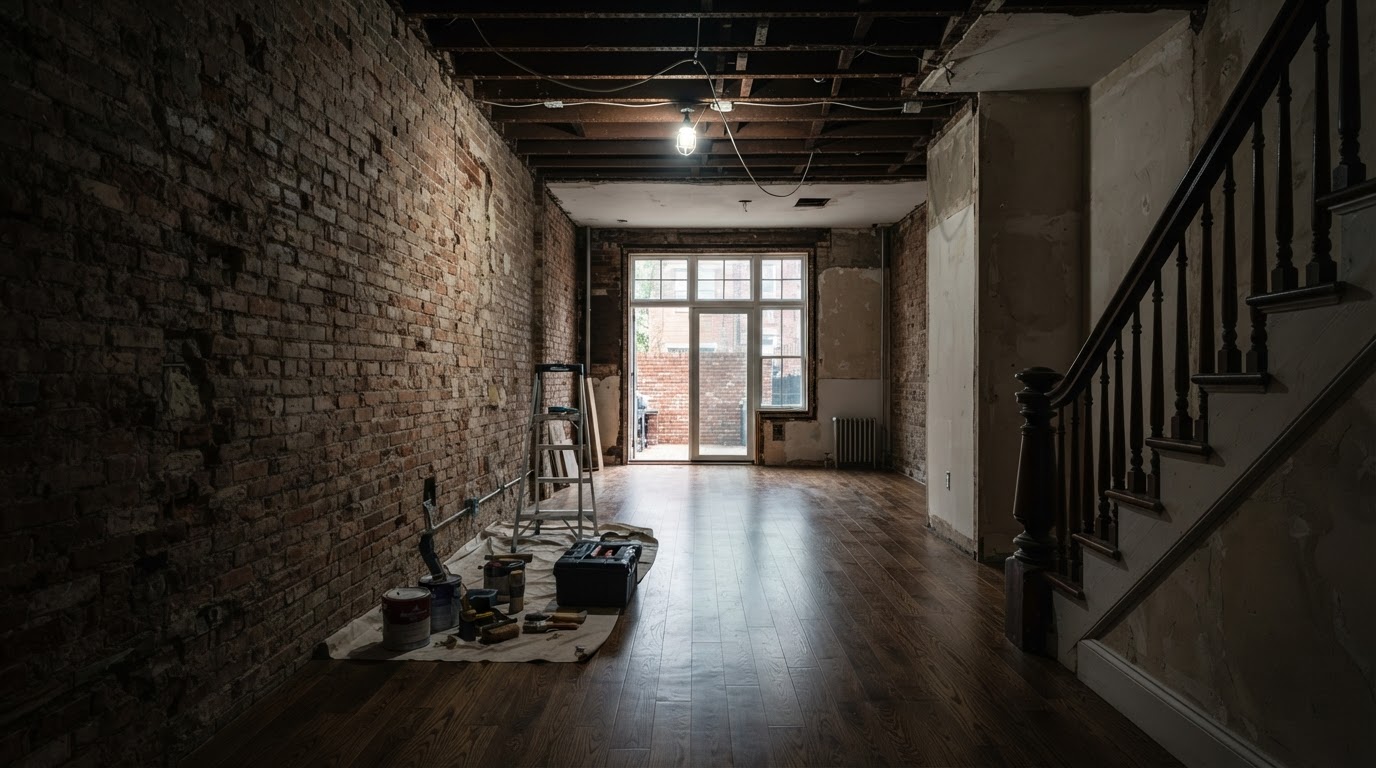
In an older Philadelphia home, the rough-ins almost always need work. The electrical panel may not have room for the kitchen loads you want. The drain lines may be galvanized and corroded. Budgeting for the hidden work first keeps the finish choices realistic.
Cabinets are the biggest lever
Cabinets usually eat the largest single chunk of a kitchen budget. The choice between stock, semi-custom, and custom drives the cost more than almost anything else.
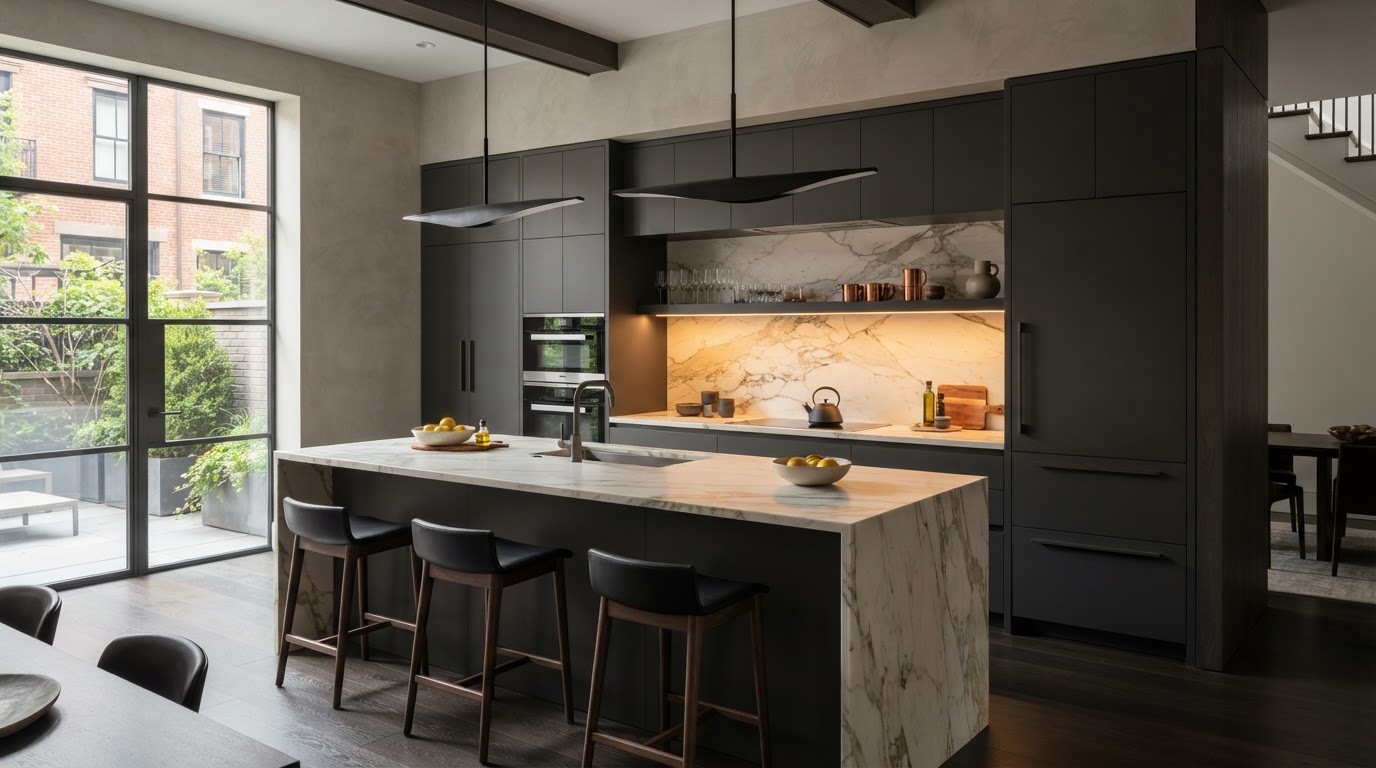
Stock cabinets keep the price down and work well when the layout is straightforward. Custom cabinets fit odd spaces and let you maximize every inch, which matters in a narrow rowhome kitchen. Semi-custom sits in the middle, with some size flexibility at a lower cost than full custom.
The decision is not just about looks. It is about how the kitchen lays out. A custom cabinet can turn an awkward corner into usable storage that a stock cabinet cannot. In a small city kitchen, that usable storage is worth more than a fancier door style.
Layout decisions cost less than redoing them
Spending on the design of the layout, before a single cabinet is ordered, saves more than any finish choice. A well-planned kitchen costs the same to build as a poorly planned one, but it works better every day.
The work triangle, sink, range, fridge, still matters. Where the dishwasher sits relative to the sink changes how loading feels. Whether the corner cabinet is a dead corner or a lazy Susan changes whether that space is usable.
This is where a design-build approach pays off. The same team thinking through the layout and the construction means the plan is buildable, not just pretty on paper.
Are quartz counters worth it?
Quartz is durable and low maintenance, which suits a busy kitchen. The right choice depends on your budget and how you use the space. We help you weigh durability, upkeep, and cost.
Should I replace the floor or just the kitchen?
If the subfloor is solid and the existing floor runs through connected rooms, you may refinish or tile to match. We assess the subfloor before recommending. A weak subfloor should be fixed before any finish goes down.
Can a kitchen remodel be part of a 203(k)?
Often, yes. Kitchen work that addresses a real repair or brings a home up to livable condition can fit a 203(k). We write the detailed bid your lender needs. Talk to your FHA-approved lender for loan specifics.
LET'S TALK ABOUT YOUR PROJECT
Tell us what you are planning. We will review the scope and follow up with next steps.