Table of Contents
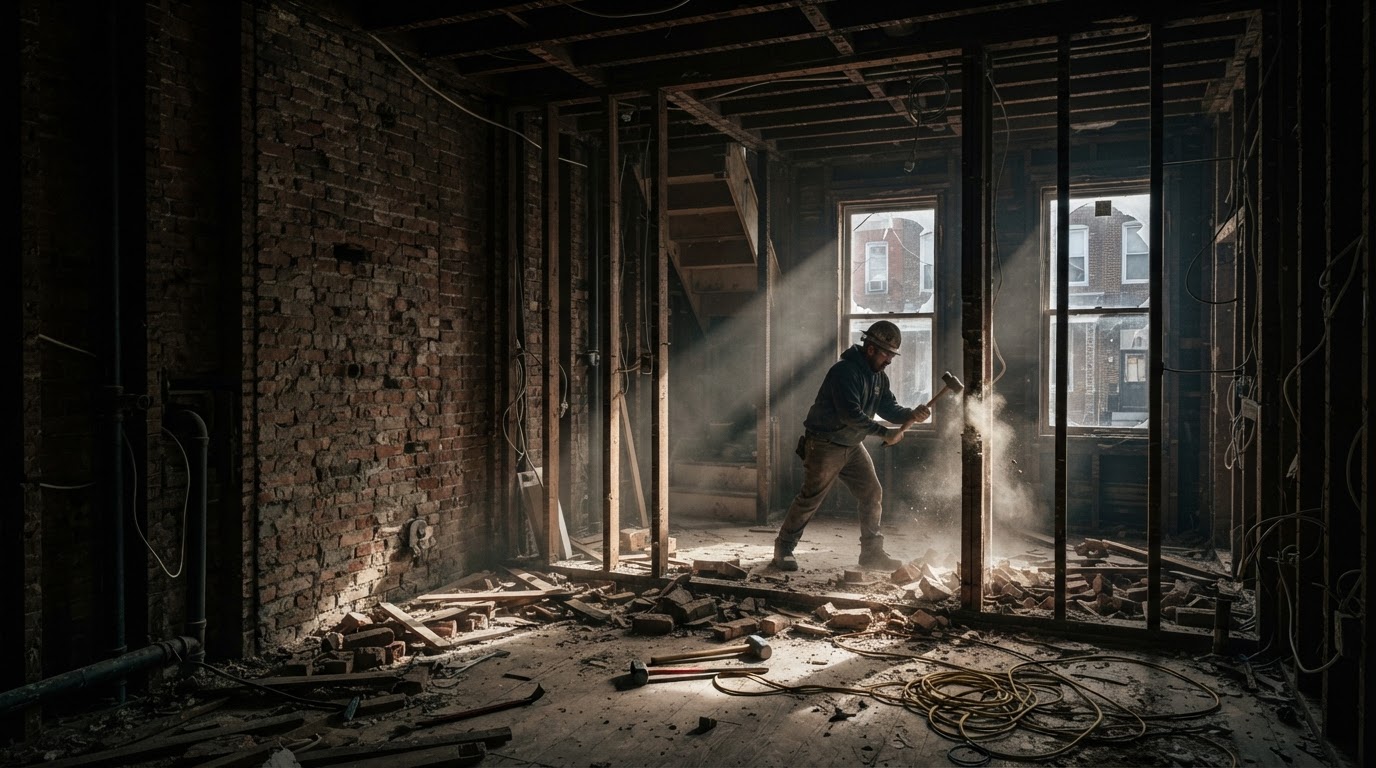
Dust is the single biggest complaint people have about living through a remodel. We seal off the work area with barriers and use negative pressure where it helps. Even so, expect some dust to travel, and cover or remove what you can.
Contain the dust
Dust is the single biggest complaint people have about living through a remodel. We seal off the work area with barriers and use negative pressure where it helps. Even so, expect some dust to travel, and cover or remove what you can.
Anything in the path of dust should be moved or wrapped. Electronics, soft furniture, and anything with a finish you care about are the first to go. A little prep on your end saves a lot of cleaning later.
In a rowhome, dust has nowhere to go but through the house. Sealing the work zone from the living zone is how you keep one side clean while the other gets demolished.
Keep one zone livable
We phase the work so you keep a working kitchen or bathroom as long as possible. Plan which rooms stay usable and set up a temporary version if you need to. A microwave, a hot plate, and a utility sink in the basement have gotten many families through a kitchen remodel.
Phasing also means we do not have every room open at once. The disruption is real but contained. We sequence so the worst of it lands in one stretch, not spread across the whole project.
If the scope is a full gut, living in the home gets hard. Moving out for the demolition and rough-in stretch is often the saner choice, even if it is not strictly required.
Plan for noise and access
Trades work during the day and need access to the home. Decide who is home and how the crew gets in. A clear plan keeps the job moving and your routine intact.
Demo and framing are loud. Drywall and finish are quieter but still disruptive. Knowing the noisy stretches are coming lets you plan around them, whether that means working from a coffee shop or taking a call outside.
Access matters in a rowhome especially. If the crew has to come through your living space to reach the work zone, we plan the path and protect it. Surprise access needs slow the schedule and frustrate everyone.
Keep your routine in mind
A remodel disrupts more than the rooms under construction. Sleep, work, cooking, and downtime all get squeezed. Thinking through where you will do each of those during the project keeps the disruption from compounding.
Pets and kids add a layer. Dust, noise, and open work zones are not always safe for either. A plan for where they spend the day keeps the job moving and everyone out of harm's way.
The good news is it is temporary. A clear schedule, even one that shifts, gives you a light at the end. We keep you updated so you always know where the project stands and what is next.
When it makes sense to move out
For a full gut, moving out is usually the easier path. The cost of temporary housing can be worth the sanity, the speed, and the safety. The crew works faster without coordinating around a family, and you live without dust in your coffee.
For a phased remodel of one or two rooms, staying is often fine. The disruption is real but manageable with the planning above.
There is no single right answer. We help you weigh it based on the scope, the timeline, and how much of the home is under construction at once.
Can I stay during a kitchen remodel?
Often yes, with a temporary kitchen set up. For a full gut, moving out is usually easier. We phase the work to keep one usable zone if you stay.
How do you protect my furniture?
We cover and seal off areas outside the work zone. Anything in the path of dust should be moved or wrapped. We plan the access path and protect it.
How noisy will it be?
Demo and framing are loud. Drywall and finish are quieter. We tell you when the noisy stretches are coming so you can plan around them.
LET'S TALK ABOUT YOUR PROJECT
Tell us what you are planning. We will review the scope and follow up with next steps.